















Forged Ring with Material Test Reports: Results, Identification and Traceability
A forged ring with material test reports is accompanied by documented results from the material examinations specified for the component. Chemical analysis, mechanical testing, and metallographic examination assess different characteristics of the steel. Their results are evaluated against the applicable material and technical requirements.
Iraeta’s laboratory capabilities cover these three areas, alongside ultrasonic, magnetic particle, penetrant, and visual testing. The associated records serve different purposes: material test reports document material examinations, while other records document processing, dimensions, and component inspections.
Their technical value comes from the connection between the identified material, the examination performed, and the result recorded.

What the Material Results Describe
The material specification identifies the steel grade and governing requirements. Testing assesses selected characteristics, and the report records the findings.
For custom forged rings, this record needs to remain associated with the material represented by the results. A steel designation identifies a material; an examination result provides measured or observed information about it.
The two descriptions are related but not equivalent. A report becomes technically useful when the material reference, examination method, results, and assessment requirements can be reviewed together.
Chemical Composition
Chemical analysis determines the steel’s chemical composition. The measured results are assessed against the composition requirements of the specified grade.
The governing specification establishes the applicable limits. Additional composition requirements, where specified, also form part of the assessment.
Spectral analysis is included in Iraeta’s laboratory capabilities. It is a method used for composition analysis rather than a separate material property.
The distinction between specified limits and measured results should remain clear in the documentation. One defines the requirement; the other records the examination outcome.
Mechanical Properties
Mechanical testing measures the properties selected for verification. The results are considered with the material grade, test method, heat-treatment condition, and acceptance criteria.
The laboratory’s listed capabilities include mechanical testing of metallic materials. The required examinations and numerical limits follow the individual technical requirements.
A recorded value therefore needs its context. Without identifying the measured property and relevant assessment basis, the number alone does not establish conformity.
Material Structure
Metallographic examination assesses the material’s structure. It provides information distinct from composition measurements and mechanical test values.
Where specified, its findings contribute to the assessment of the material condition. The examination remains separately identifiable rather than being merged into a general statement that the material has been tested.
Chemical analysis, mechanical testing, and metallography supply complementary information. Each addresses a different characteristic and retains its own examination requirements.
Heat-Treatment Condition and Test Results
The material condition represented by testing is an essential part of the result’s meaning. This is particularly relevant when mechanical properties are assessed after specified thermal processing.
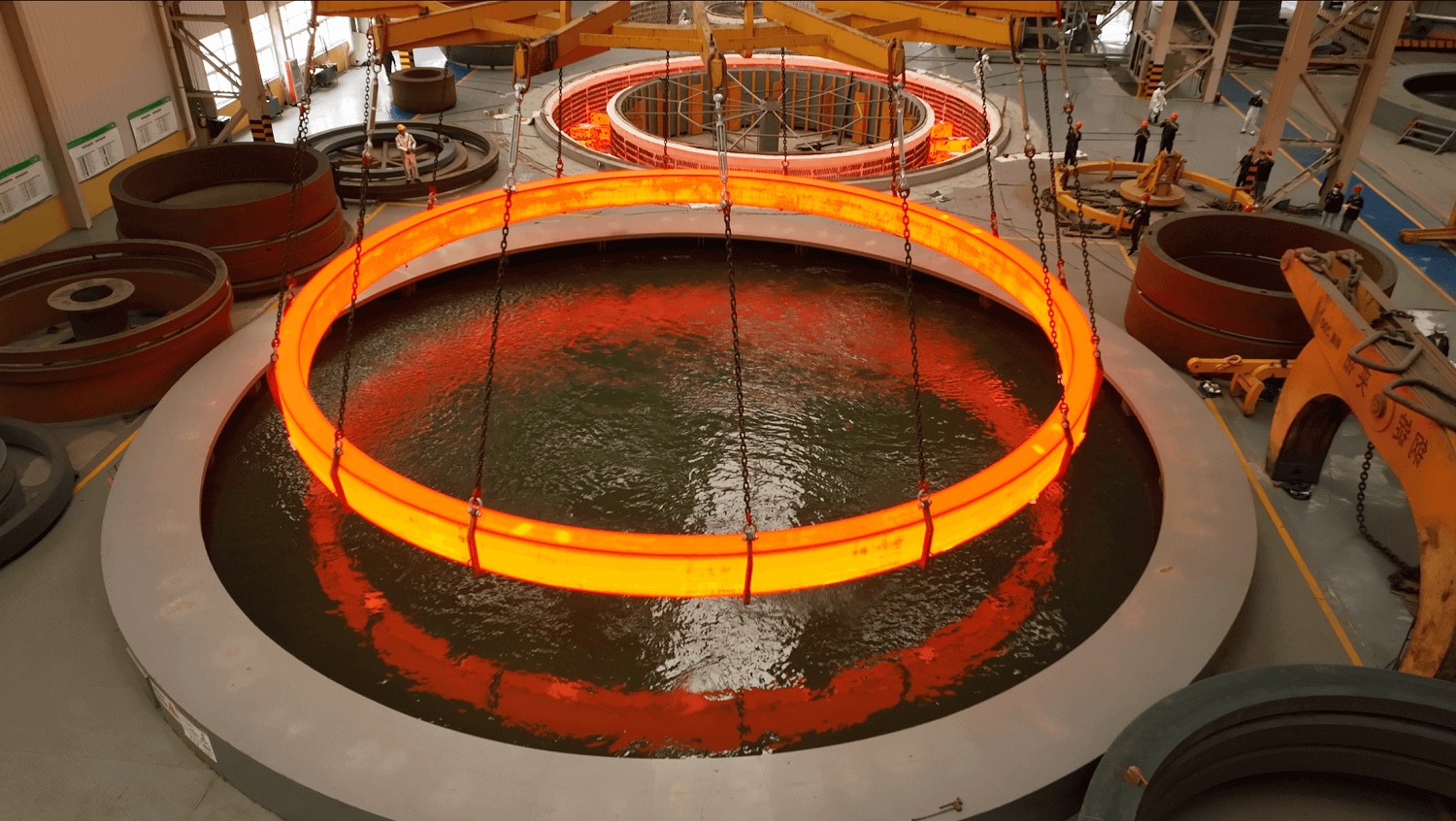
Normalizing, annealing, quenching and tempering, and stress-relieving annealing serve different purposes within manufacture. The treatment description establishes the relevant processing condition, while testing records the characteristics selected for verification.
A heat-treatment record and a material test report document separate activities. The former records thermal processing; the latter records an examination and its results.
These documents can contribute to the same component record without becoming interchangeable. A processing statement does not replace a test result, and a test value does not describe the complete thermal-processing operation.
The required relationship between them follows the component’s material and examination requirements.
Identification Links the Report to the Ring
Material identification connects the reported results with the steel represented by the examination. Consistent references allow the component and its documents to be reviewed together.
The information coordinated across the documentation includes:
Component and drawing references.
Steel grade and governing specification.
Identification linking the results to the represented material.
Material condition relevant to the examination.
Test methods, results, and acceptance requirements.
These categories describe the information requiring coordination, not a fixed reporting template for every ring.
Traceability also extends across records. Material reports, heat-treatment records, and inspection reports document different activities but need consistent references to the appropriate component.
A document review therefore examines both the results and their identity. The examination must address the required characteristic, and its record must relate to the material or component under assessment.
Material Reports and Other Inspection Records
Material test reports form part of the wider component quality documentation. Other records address manufacturing activities and characteristics outside their scope.
Dimensional Inspection Reports
Dimensional inspection reports address the geometry achieved at a specified manufacturing stage. Their reference is the applicable drawing and dimensional requirements.
These results remain distinct from material examinations. Composition and mechanical properties concern the steel, while dimensional inspection concerns the geometry produced through manufacture.
Nondestructive Testing Reports
Nondestructive testing reports document the specified examinations and their results. Iraeta lists ultrasonic, magnetic particle, penetrant, and visual testing among its capabilities.
The material-testing and inspection facilities cover these methods, while component requirements determine which examinations apply.
The relevant inspection information includes the method, examination areas, manufacturing stage, and acceptance criteria. The availability of several methods does not mean every ring requires all of them.
Heat-Treatment Records
Heat-treatment records concern the thermal-processing activity. They provide a processing reference alongside the examinations used to assess specified material characteristics.
Within the heat-treatment processes used for forgings, the selected route follows the material and manufacturing requirements. The associated records remain distinguishable from the results generated by material testing.
Laboratory Accreditation and Component Reports
Iraeta’s laboratory is accredited by CNAS in accordance with ISO/IEC 17025. Accreditation concerns the laboratory and its recognised scope.
A component test report operates at a different level. It records an examination performed on identified material and the results obtained.
The applicable method and accreditation scope therefore require consideration alongside the examination requirements. A laboratory credential does not replace the report for a particular component.
Quality-management certification is also distinct. It concerns the certified management system rather than the measured composition, properties, or dimensions of an individual ring.
Conclusion
A forged ring with material test reports connects identified steel with documented examination results. Chemical analysis, mechanical testing, and metallography assess different material characteristics, while thermal-processing and inspection records document their respective manufacturing activities.
Iraeta’s laboratory information and ring-product range provide routes to examine these requirements. Engineers can review the available methods or discuss material testing and documentation with the technical team, focusing on the condition represented by testing, the required examinations, and the identification connecting the results to the component.


Recommended reading
Unlocking the Secrets of Forging: The Performance Code of Classic Processes
Must-Read for Ring Forging: Advantages and Applications of the Forge-Rolling Process
Open-Die Forging vs. Ring Rolling: Helping You Choose the Optimal Forging Process